

May 1, 2026
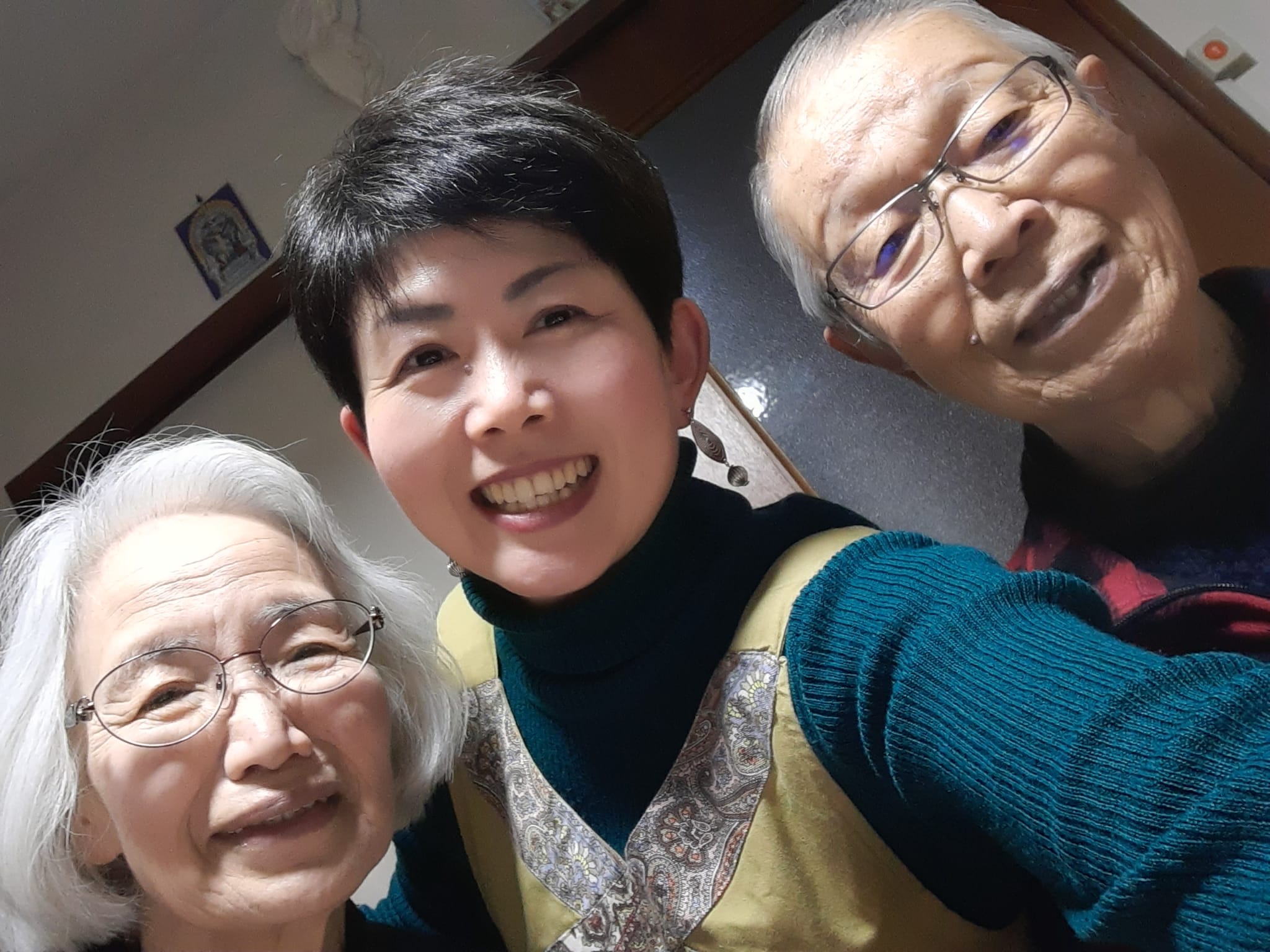
The Clover Foundation gave a grant of $460,000 in 2025 to Non-Profit Organization VIEW, or NPO VIEW, established in 2007 in the city of Ashiya, Japan. This organization promotes activities for the comprehensive development of professional women and students. Their building, called the Ohara Bunka Center, is a 4-story building which was renovated in 2025 to become more accessible to the elderly and those with special needs.
Japan has many historical names: Land of the Rising Sun, the Sun’s Origin, Source of the Sun.
But for an intrepid group of women who left their homes years ago to settle in Japan and create a center for the development of women and students—they call Japan by another name.
Home.
An Economic Dynamo
Japan is a nation in East Asia comprised of four major islands. It is an economic powerhouse, and the only Asian nation in the G7. In 2025, Japan was the 5th largest economy in the world. It is a leader in automotive, electronics and robotics industries and makes significant contributions to science and technology.
A culture of excellence and hard work enabled Japan to rise from the ashes of World War II, after the nation was defeated and largely destroyed.
Today, there are 123 million people living in Japan. Like South Korea, it has a low birth rate (1.2 children per woman) and a high life expectancy (85.15 years). Unless something drastic changes, the population is expected to plummet to 88 million by 2065.
A Culture of Intensity
Despite the economic gains within the country in the last 70 years, Japanese people face tremendous stress. As a country, Japan has one of the highest suicide rates in the world.
Part of the reason for this severe unhappiness is social isolation and loneliness. There is an intense work culture characterized by long work hours and unpaid overtime. In fact, in Japan there are two terms used to describe this: karoshi – death from overwork, and karojisatsu – suicide from overwork. Many Japanese suffer financial anxieties. Students face pressure to do well on entrance exams and often complain about rampant bullying in schools.
As a culture, it is considered a sign of weakness in Japan to ask for help. Few people in the nation practice a religious faith requiring weekly observance. 48.65% of the population practice Shintoism, 46.2% practice Buddhism and 0.45% practice Catholicism.
Today, Japan is considered one of the most secular nations in the world.
A Different Kind of Center
The international team that created NPO VIEW in 2007 did so with the express desire to introduce a new horizon to Japanese women that includes the development of the whole person. They host classes on: meaningful lifestyles, human relations, occupational ethics, anthropology, home-making, international cuisine, nutrition, English, family education, parenting, and Catholic doctrine. They have also made it a priority to give special attention to the elderly.
Kazuko Nakajima, a native Japanese woman, is the Director for NPO VIEW. She first encountered the teachings of Saint Josemaria, the founder of Opus Dei, in Japan during the 1960s. She was deeply impressed with his message of the sanctification of the workplace. Housemates describe her as a person of immense energy and initiative when it comes to helping those around her and society at large.
“She has poured all her energy into sharing that message, striving to infuse a Christian spirit—one filled with humanity and hope for every individual, family, and society as a whole—into the many initiatives she has championed alongside others,” said Paula Senda, one of the residents at the Ohara Bunka Center. Senda grew up in Brazil and is second-generation Japanese.
Today the Ohara Bunka Center has 22 rooms, with women of different ages living here: from 30 up to 93. The idea of transforming the Ohara Bunka Center into a space that gives special attention to the elderly originated with Kazuko.
“Kazuko also played a role in establishing a school in Nagasaki, as well as various cultural centers for children, youth, mothers, and families across Japan; she has also encouraged others to launch initiatives for the benefit of Japanese society,” said Senda.
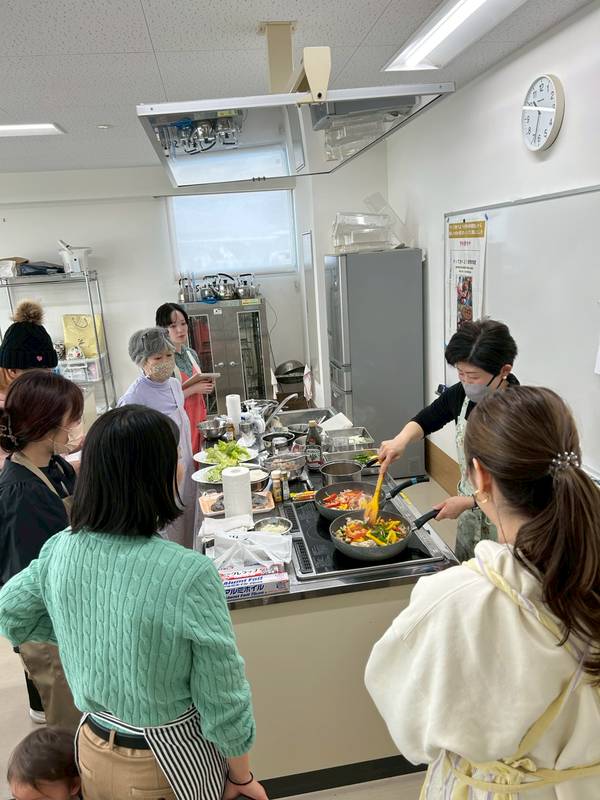
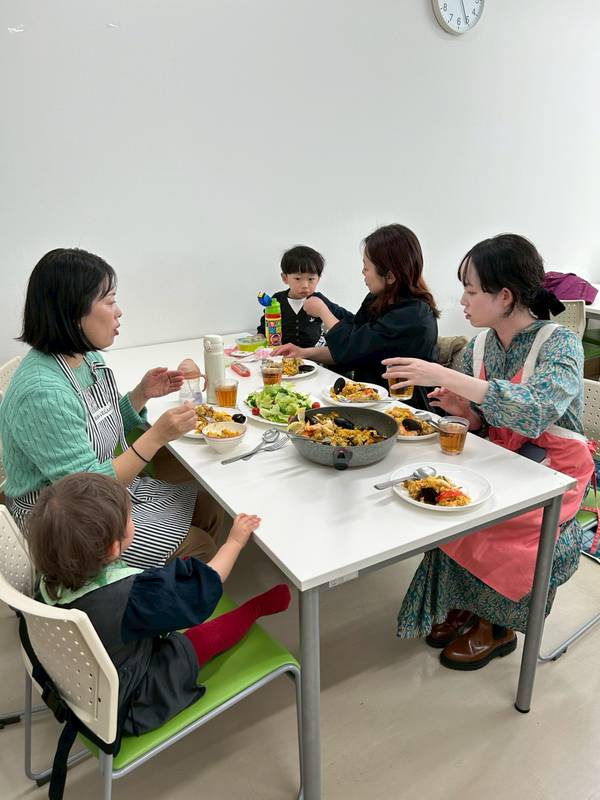
NPO VIEW’s cultural activities attract many locals. These are women of religious faith or no faith at all. There are international cooking classes for children with a professional chef. There are also classes on family relationships for married women. In some cases, NPO VIEW has classes for moms with activities for their children at the same time.
“The idea is that as children grow, they can become involved in children’s activities, while the moms do activities for themselves,” said Senda.
NPO VIEW tries to host activities for young moms to help them form friendships.
“These moms might feel lonely during this time, especially if they are not working, so we tell them to come to our center. We take care of the babysitting, while they take a cooking class, laugh and rest for a bit,” said Senda.
For university students and young professionals, NPO VIEW has a club which hosts dinners.
“We want the students to gain confidence in themselves and ask questions,” said Senda. “Through this club, we draw people closer to each other.”
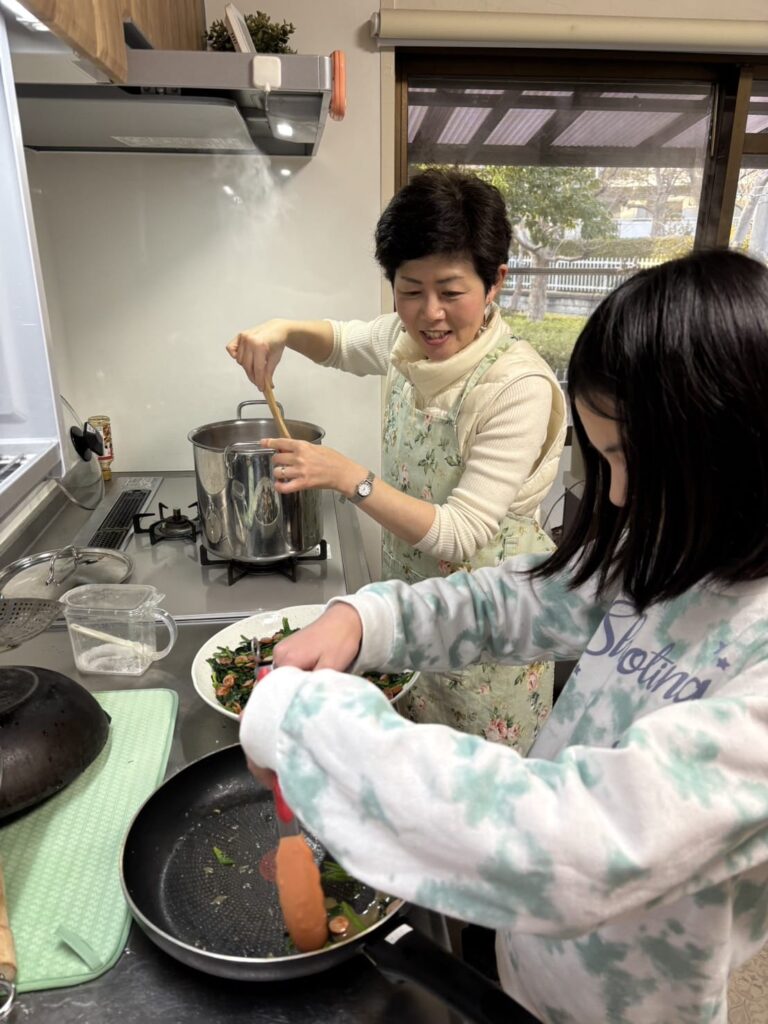
Friendship is the main goal for residents of NPO VIEW.
“We talk to women, see how they live. They ask us lots of questions. We start little by little. Everything is very slow here. We need to be patient,” said Senda.
NPO VIEW also offers classes on Christian doctrine for those who are interested.
“Sometimes people come to us because they want to be baptized. Some high school students come because they want to study catechism. Others come because their parents were Catholic but never had them study doctrine,” said Senda. “Some foreign families move to Japan and want their children to be brought up Catholic, so we do classes one-on-one, in a group or online for those who live far away.”
Coming Back Home
Yukiko Kojima is another resident of NPO VIEW. Born in Kyoto, she moved to Spain at the age of 13 with her family of seven brothers and sisters. During her time in Navarre, the whole family converted to Catholicism.
“We all took it very seriously. We were given a very good formation, and it changed my life,” said Kojima.
Eventually, Kojima moved back to Japan in 2009. At first, she lived at a women’s center in Nagasaki where there was a cooking school. She eventually joined the team at NPO VIEW in 2016.
“It was a very big impact to move back. Japan had changed so much! Even though I am Japanese, I became used to another mentality. It was hard and a challenge,” said Kojima.
People in Japan are generally afraid of religion because of a doomsday cult which perpetrated a terrorist attack on the Tokyo Subway system on March 20th, 1995. On that day, members of the Aum Shinrikyo cult released sarin gas on five subway lines, which killed 14 people and injured over 5,000 others.
“After that people became afraid of religion. The attitude is: don’t tell me anything. You can believe if you want to, but don’t talk to me about it,” said Kojima.
What the residents of NPO VIEW have learned is the importance of warmth and relationships.
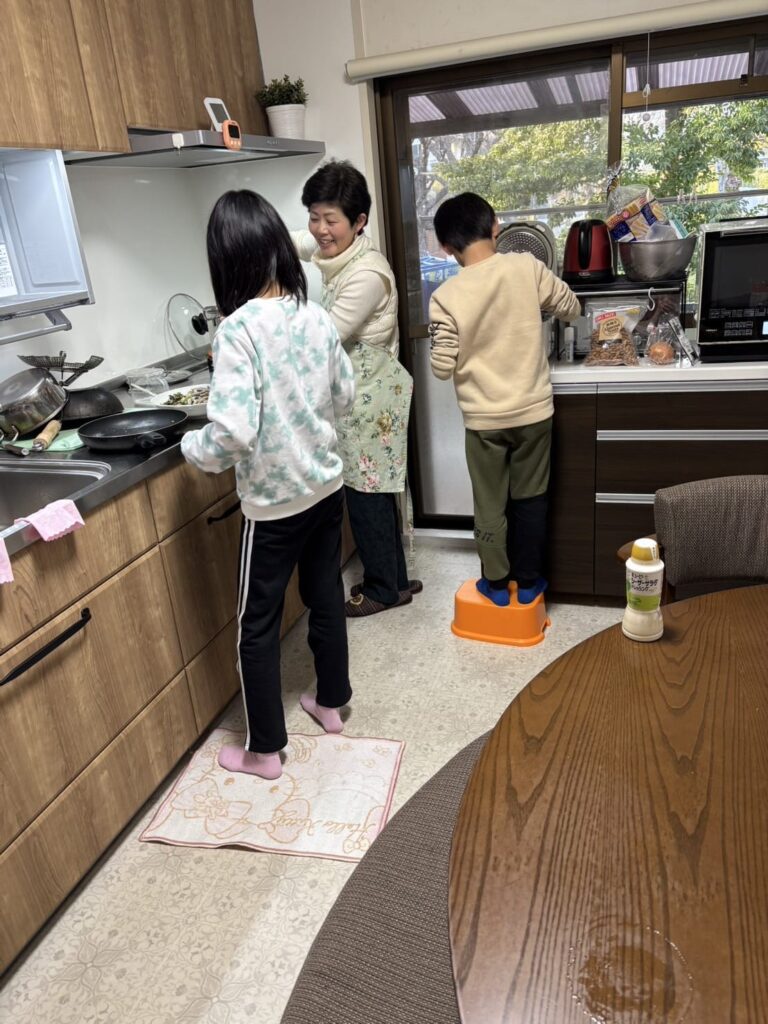
“Transmitting faith starts with friendship,” said Kojima. “I have a friend who has had a very hard life. I listen to her and share my thoughts with her. Then, I tell her that I will pray for her. This comes naturally for me, and it becomes normal for her to thank me for praying.”
Others don’t connect with faith, no matter how many years of friendship pass.
“It needs a lot of time,” said Kojima. “It can be really hard. With some people, it seems they just don’t care about those things.”
One thing Kojima notes is how deeply Japanese people care about their own families, especially women.
“Women are really the ones entrusted to take care of children, even though their role is changing. There are many divorces now and many sad stories of suffering. People are very relativistic now and believe there is no such thing as truth,” she said.
The pressure for women to work outside the home to find success is also extremely strong.
“Yet lots of women really value their own families. They say, ‘If I am working all the time, when will I enjoy my kids?’,” said Kojima.
It is a hard balance to reach, but one which NPO VIEW helps women find within themselves.
Sidebar – A Bostonian in Japan
Margaret Travers is 93 years old. Originally from Boston, she moved to Japan in 1960 to help found a language school. This was during a time when the demand to learn English was high in Japan. When Travers arrived in Japan, she knew no Japanese whatsoever.
“I studied Japanese privately for 8 years. Today, I can manage everyday Japanese conversation, but it is a difficult language,” said Travers.
The language school where Travers worked operated for 40 years. It closed in 2000 after many Japanese universities began to offer their own language schools. She has continued teaching English through the years, even to the present day at NPO VIEW, where she still teaches two students every week.
Travers thinks of her students as her friends. When she looks at Japanese culture, she feels that Japanese people take a long time to let others in.
“But when you do make a friend in Japan, they are your friend for life,” she said. “I find Japanese culture so fascinating. You can learn something new every day. Everyone is so helpful.”
The last time Travers went back to her native United States was in 2004.
“My parents have passed away, and I only have one brother who is still alive,” she said. “But my home is here.”