
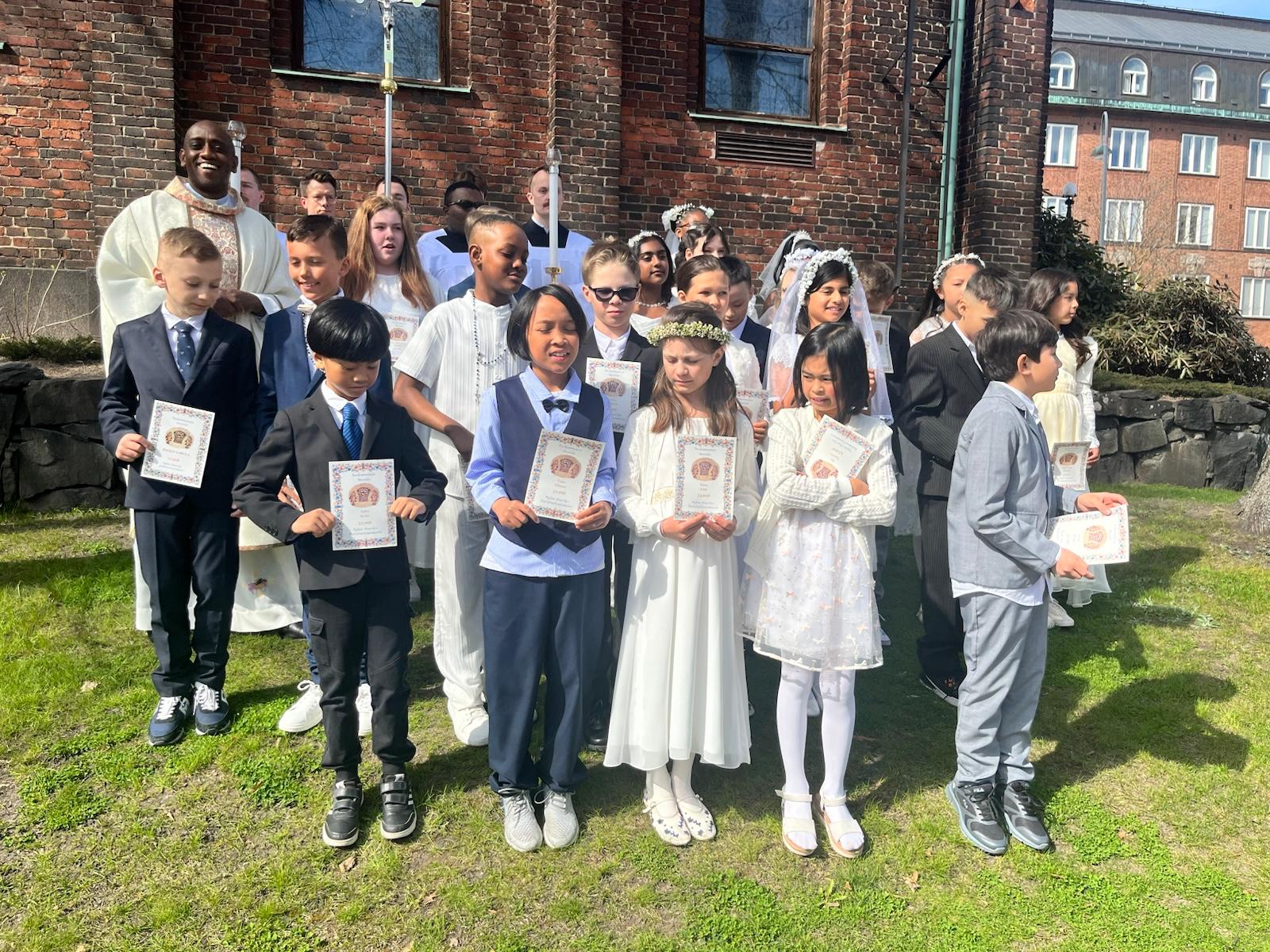

The Clover Foundation gave a grant of 200,000 Euro to the Catholic Diocese of Helsinki in 2024 to repair water damage to Bishop Raimo Goyarrola’s house, which also serves as the office building and headquarters for the diocese.
The country of Finland is known for endless miles of pine forests, Northern Lights and the breathtaking beauty of its 168,000 lakes.
It is now becoming known for something new: Finland’s small but vibrant Catholic community, and the extraordinary ecumenism that takes place among Catholics, Lutherans and Orthodox Christians.
During long winter nights, when the sun does not rise for 51 consecutive days in the Lapland region of Finland, there is a story to tell about the energy of the Catholic community, and how the different religious groups in Finland work together. It is a beautiful tale that pulls in the lives of native Finns and immigrants who hail from the Middle East, Africa, Asia, Latin American and Europe; each group contributing to an unexpected and new cultural moment.
It is a unique Northern Light all its own.
The Happiest Place on Earth
Finland has been ranked the “happiest place” on earth for nine years in a row. The reasons why Finns are so happy include: universal health care, free education from pre-school through university, generous pensions and maternity benefits, help for the unemployed and low crime rates.
“Kids walk to school or ride their bikes, without parental supervision. It is very safe,” said Isä (Finnish for “Father”) Jean-Claude Kabeza, the Vicar General for the Diocese of Helsinki. “My siblings are all married and doing well here. Their children get free lunch at school. The air is clean, and the country is very green.”
Finland is 16th in the world by GDP. As a country, they receive many immigrants who are fleeing for political reasons. Since 2022, they have received over 90,000 Ukrainians after the Russian invasion. They also have a large refugee population from Iraq and Somalia.
A Small but Vibrant Community
Today, there are 20,000 Catholics in Finland out of a population of 5.6 million. This accounts for 0.35% of the population. 65% of Finns are Lutheran, and another 1% are Orthodox.
The entire country of Finland forms the one Catholic Diocese of Helsinki, with 8 parishes in a nation roughly the size of Italy (130,692 square miles). 45% of Catholics in Finland are ethnically Finnish. The rest are immigrants.
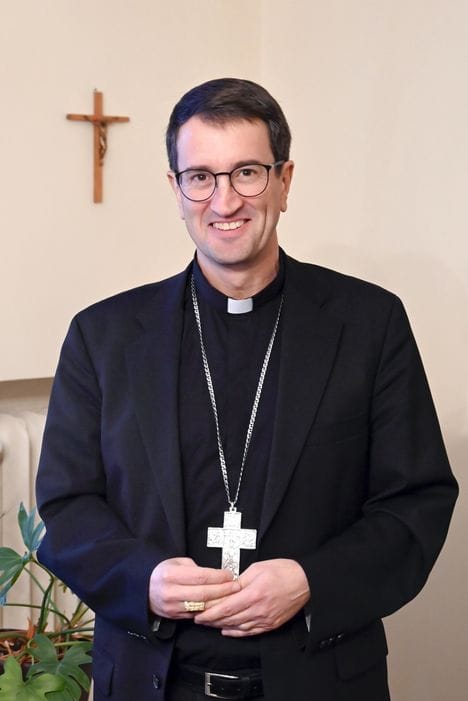
“We have 125 nationalities represented within the Catholic Church of Finland, which is very beautiful. We have all the rites represented here: Maronite, Byzantine-Ukrainian, Chaldean Catholic, Syro-Malabar, etc.” said Bishop Raimo Goyarrola, the prelate of the Diocese of Helsinki who hails from Bilbao, Spain. He arrived In Finland in 2006.
Every year, the diocese of Helsinki welcomes about 500 people who convert to Catholicism: 100 Finns and 400 non-Finns.
“Because of the great distances between parishes, many of the catechism classes have to be online. The 29 priests in our country need to travel many miles each week to visit parishioners,” said Bishop Raimo.
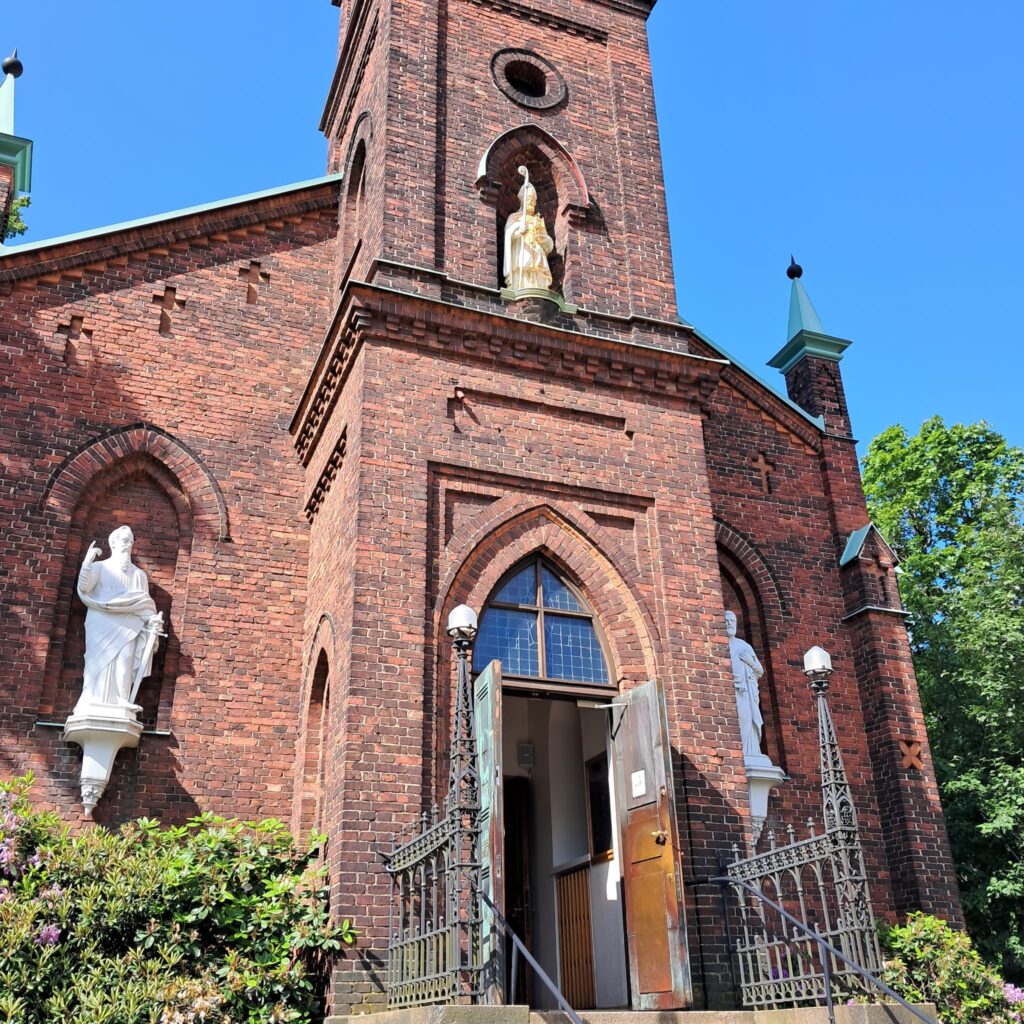
St. Henry’s Cathedral in Helsinki has 6-7 Masses every Sunday. Many times, there are people who need to stand outside because of lack of space.
“We have two Masses in English every Sunday as well as two Masses in Finnish,” said Fr. Kabeza. “Besides this, every month, we have Masses in 12 different languages.”
Because of the lack of Catholic Churches, some families need to drive 200 miles every week just to attend Mass. Masses are celebrated in 33 cities in Finland.
“Sometimes, people need to drive four hours just to reach a parish. In the winter, they often travel in total darkness,” said Fr. Kabeza.
Among his many projects, Bishop Raimo is opening – again – the first Catholic school in the country this August. (Finland used to be a Catholic country for centuries, prior to the Protestant Reformation). A Catholic Pastoral Center opened in Helsinki in May.
Though Catholics are a minority in Finland, they don’t hide their faith.
“I am always impressed with the courage of our Catholics. We have many foreigners working in Finland and living their faith. Many people tell us that they are the only Catholics in their entire school or workplace,” said Bishop Raimo. “We try to be really positive.”
In the cathedral of St. Henry in Helsinki, parishioners represent over 100 nationalities.
“We have people from everywhere. To see these people united by faith and praying together every Sunday is a kind of Pentecost. I listen to Confession every week in Finnish, Rwandese, English, French and Lingala. It is amazing, like what happened at the beginning of the Church. Every priest in Finland has to speak at least 3 languages,” said Fr. Kabeza.
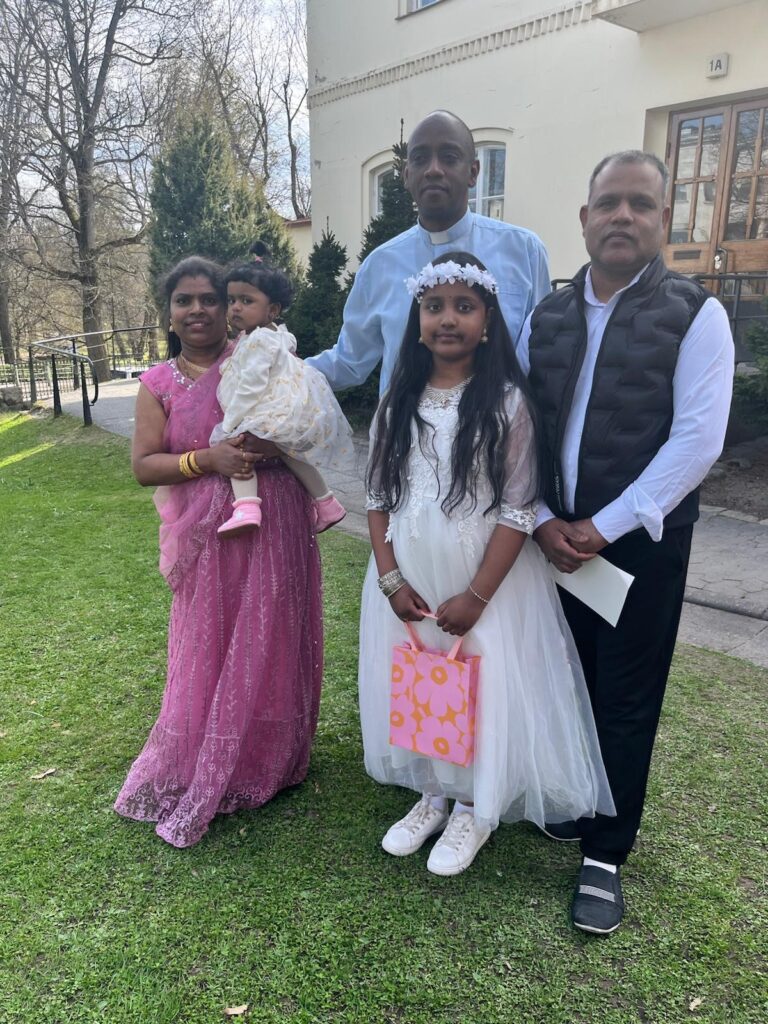
While there used to be a prejudice in Finland against Catholics, this has mostly disappeared.
“Pope John Paul II visited Finland in 1989 and opened the doors psychologically. Pope Benedict XVI opened doors theologically with Lutherans during his pontificate. And Pope Francis opened the doors socially. Now there is a very positive view of the Catholic Church,” said Bishop Raimo.
A Poor Church
One of the biggest challenges for the Catholic Church in Finland is how financially strapped it is. It is an irony that one of the wealthiest countries in Europe has one of the poorest Catholic churches.
While Lutherans and Orthodox Christians in Finland can give a portion of their taxes to their churches, Catholics cannot.
“Bishop Raimo has been trying to convince the Finnish government to allow us to do this,” said Fr. Kabeza.
The Diocese of Helsinki does not have enough funds to cover basic costs, and Bishop Raimo frequently travels around the world trying to raise funds for his fledgling diocese.
“The state does not help us. But, you know, when you are poor, your prayer life grows a lot!” said Bishop Raimo, with his typical good humor.
Ecumenical Relations
Because of the small number of church properties owned by the Catholic Church in Finland, Catholic Masses are mostly held in Lutheran and Orthodox churches. Two churches rent space to the Catholic Church, while 23 other churches loan out the space for free.
“They are very generous to us,” said Fr. Kabeza. “Our ecumenical life is the best in the world. Bishop Raimo and the Lutheran and Orthodox bishops are great friends. Every year they go to Rome and have a private audience with the Pope together. This is a long-time tradition.”
They meet with the pope around January 19th, the feast of St. Henry, which also falls during the Week of Prayer for Christian Unity at the Vatican.
Back in Finland, Bishop Raimo meets with the Lutheran and Orthodox bishops of Finland frequently to discuss issues of common concern. The three bishops meet to organize Pro-Life demonstrations and work against abortion and euthanasia. They have published a joint declaration on palliative care and against euthanasia.
“The Orthodox are very close to us on these issues. Also, some Lutherans are close to us,” said Fr. Kabeza. “Euthanasia is not legal, but the government is trying to promote it. We are pushing against this.”
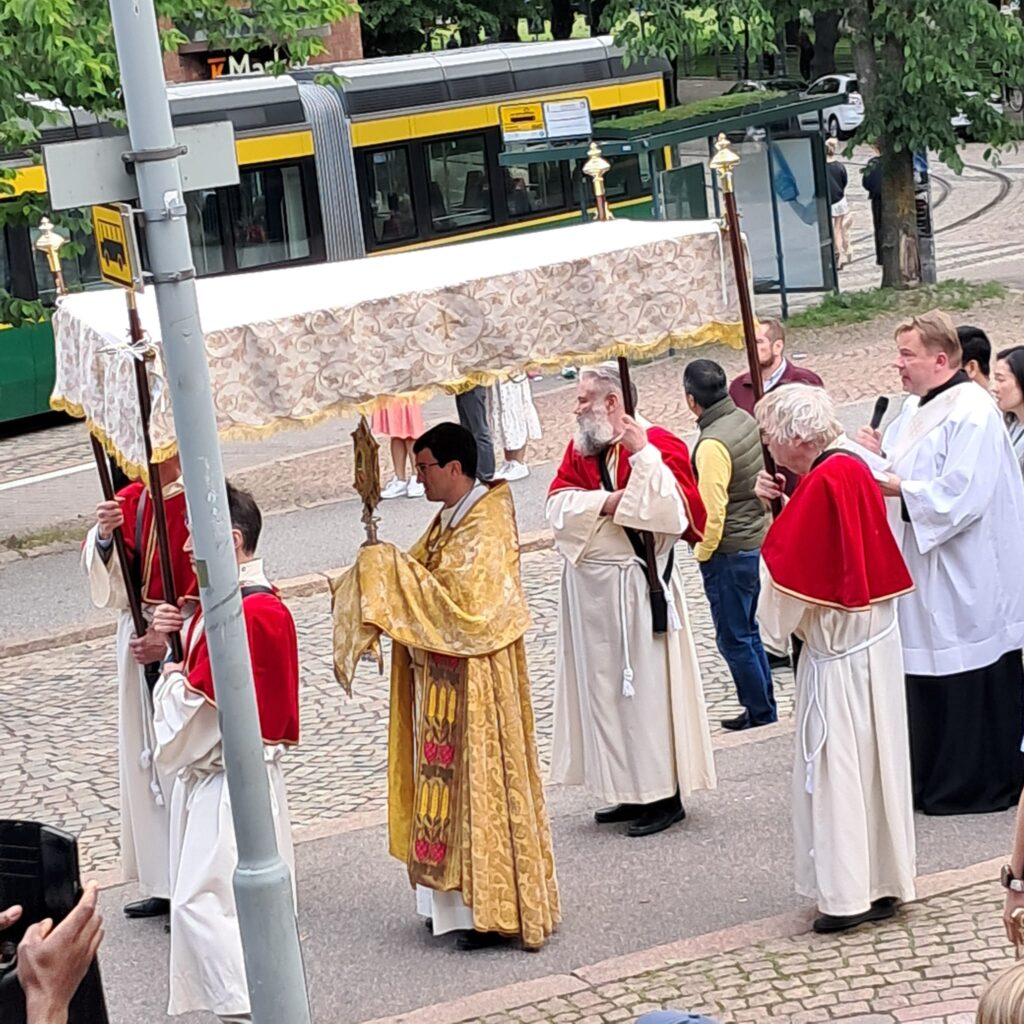
One of the most beautiful activities they organize is an outdoor procession held every year in Helsinki on the feast day of the Nativity of the Virgin Mary on September 8. Last year, 400 Lutherans, Catholics and Orthodox participated. An Orthodox choir, a Catholic choir and several Lutheran pastors participated.
“Our communities meet and venerate the Virgin Mary in the Orthodox Church together, with prayers from the Orthodox tradition. Then we process across town and go to the Catholic Church and say the rosary in front of a statue of Our Lady of Fatima,” said Fr. Kabeza.
The Catholic Church in Finland also works with the Lutheran and Orthodox Churches against racism and on social issues having to do with refugees.
Living in Freedom and Safety
Many Catholics who live in Finland are political refugees from other countries.
Father Kabeza came to Finland in 2005 as a refugee from Rwanda, after living through the genocide in 1994. His father was killed in 1997 in front of his mother and 3 sisters. He fled with his mother and 6 siblings to a refugee camp in Congo for two years. Eventually, Fr. Kabeza’s family was given asylum in Finland. Today, he has three siblings in Finland and his mother. All of Fr. Kabeza’s sisters and brother are married, and he has 13 nieces and nephews. His entire family is doing well and flourishing.
“I always say that my life is based in the 3 F’s: faith, family and forgiveness. If you cannot forgive, then you will remain in a jail in the past, and you will always be sad. Today, we are so happy. Why should I stay in judgement and hate? How can I not thank God?” he said.
Today, Fr. Kabeza is the Vicar General for the Diocese of Helsinki and pastor for the Cathedral of St. Henry in Helsinki. Since his arrival in Finland, he learned Finnish, English and French besides his native Kinyarwanda (the official language of Rwanda) and Lingala (one of the main languages in Congo). He loves his vocation as a priest and especially working with young people.
“Often young people come to church and ask us: ‘Can we talk? What is the meaning of my life?’ It is very touching. My door is always open,” said Fr. Kabeza. “Though I give to them, they give so much more to me. Though our church is poor financially, we are very rich spiritually.”
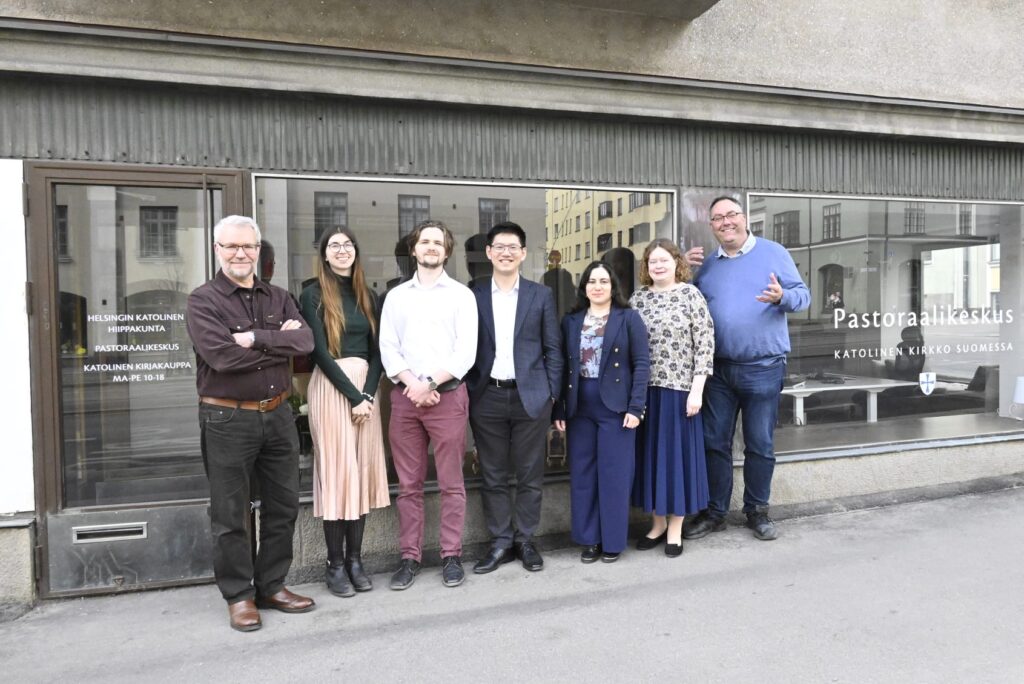
Meisa Dano is an Iraqi Catholic of the Chaldean Rite. Her family fled Iraq when she was 9 years old because of the Iraq/Kuwaiti war. After living in Jordan for three years, her family was granted asylum in Finland.
“Every 5 to 10 years, the Christians in Iraq are persecuted. We come from a village in the North of Iraq called Alqosh, with one of the two oldest monasteries in my country,” said Dano.
Today, Dano is the executive director of the Pastoral Center in Helsinki, a project that was created by Bishop Raimo. It serves as a hub for supporting parishes and the faithful through catechesis, education, media, and new evangelization. It opened Finland’s first Catholic bookstore for books and devotional items in May 2026.
“The Pastoral Center has 16 working groups. We have family groups, social media groups, communications, groups for catechesis. I stay in touch with all of them to see what they need. In November 2025, Bishop Raimo decided to put them all under one roof and asked if I would direct it,” said Dano.
Catechesis in Finland is both an online project as well as in-person.
“The Catholic Church of Finland has an Instagram and Facebook page. We try to use social media for evangelization. For young people it is important. We share videos and film all of our Masses,” she said.
Reasons to Hope
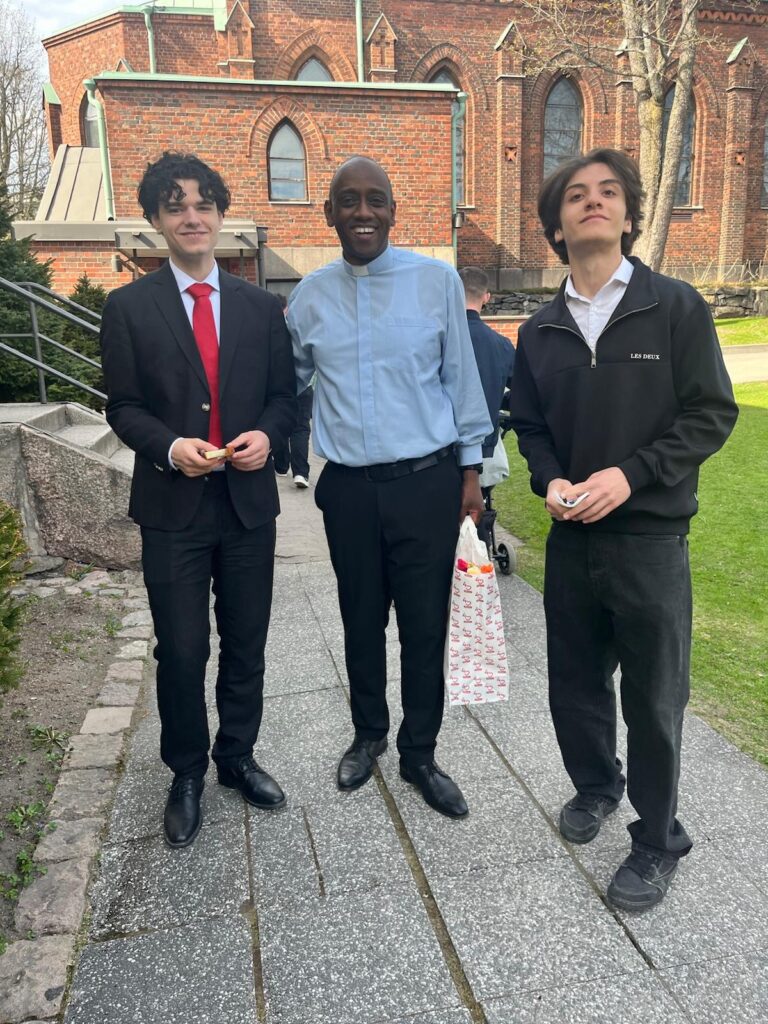
What gives confidence to the Catholic priests of Finland is seeing young people knocking on their doors, asking to become Catholic.
“What we have discovered is that many people go on-line and listen to podcasts from American bishops or American Catholic apologists. Many are finding their faith through people like Bishop Robert Barron,” said Fr. Kabeza.
When these young Finns show up asking questions, the Diocese of Helsinki is waiting with open arms.
As Bishop Raimo likes to say about the challenges of being a Catholic in Finland, “There are no problems. Only dreams.”