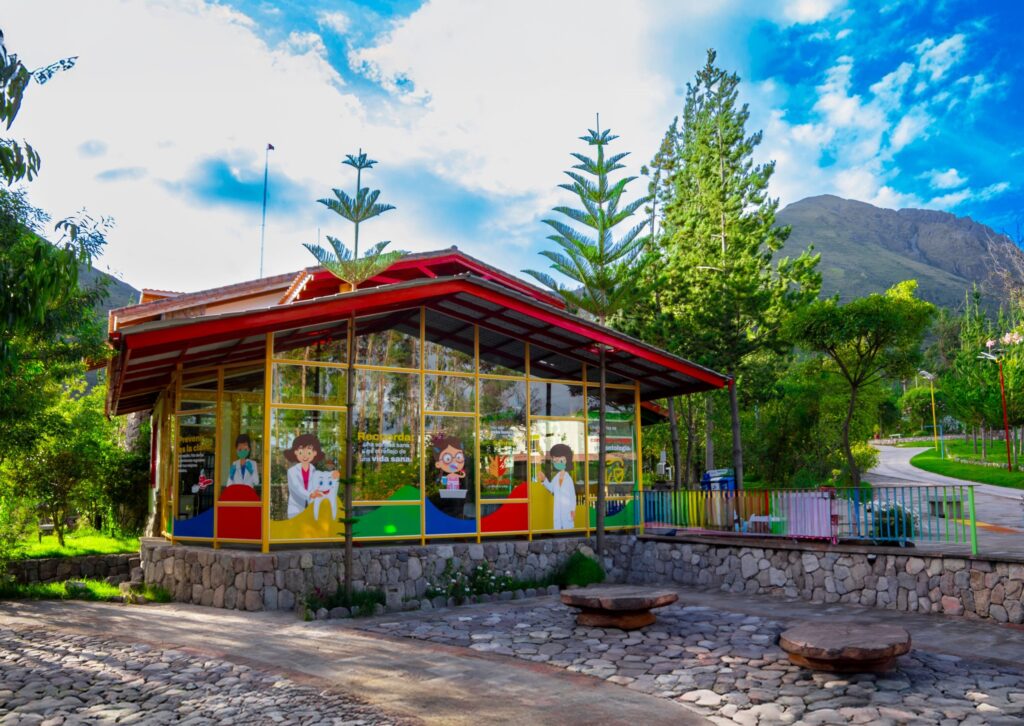


Pictured above: The winner of 2025 Campodonico Prize, Giannina Honorio
January 29, 2026
Dr. Esteban Campodonico believed that his adopted country of Peru had countless unsung heroes. Because of this, he left a trust to fund an annual prize for Peruvians who positively impacted the country. Little did he know that more than half a century would have to pass after his death before the Campodonico Prize could be established. It has now been awarded for 31 years straight, becoming Peru’s unofficial Nobel Prize.
A Pioneer in Medicine: Dr. Esteban Campodonico
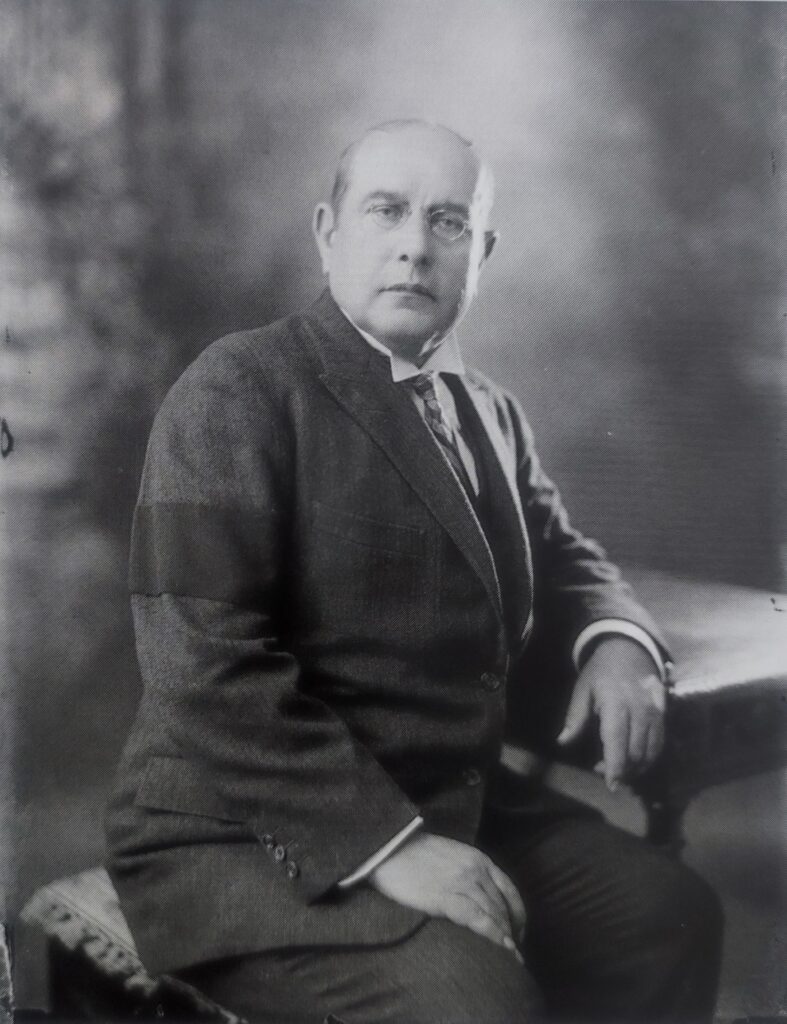
Esteban was born in Italy in 1866 and moved to Peru at the age of 13. Peru proved to be the land of opportunity because he would grow up to become a celebrated doctor.
“His specialty was ophthalmology and radiology. In fact, he was one of the first doctors to bring x-ray machines to Peru,” said Professor Bob Moniot of Fordham University, and Vice President of the Clover Foundation.
Esteban studied medicine in Lima, Peru, Bologna, Italy and Vienna, Austria. He also did internships in Philadelphia and New York. Esteban established a private practice and saw patients for forty years. He also held important positions in Lima’s Italian Hospital Victor Emmanuel II, and the University of San Marcos.
“Esteban pioneered the practice of radiology in Peru. During his career he traveled frequently to scientific conferences in the Americas and Europe,” said Moniot.
A Humanitarian and Philanthropist
Besides his work as a doctor, Esteban was a serious humanitarian. During the Peruvian Civil War of 1894–1895, while still a medical student, he attended to the wounded on both sides. He operated an ophthalmology clinic, free-of-charge, for the needy, and played a major role in a campaign to eliminate tuberculosis in Lima in 1931–1934.
“Before his death, Esteban wrote up a will with a section where he specifically wanted there to be a trust which would award a prize each year in his name. Today, that prize is worth $50,000 every year,” said Moniot.
Love during the Sunset of his Life
Esteban married late in life, in 1938, when he was 71. His wife, Ethel Graff, was 51.
“It is believed that they met while both were traveling. My best guess is that it was at the Waldorf Astoria Hotel in New York in 1926,” said Moniot.
This union would be tragically short-lived.
“They were only married for 4 months. On their way back to Peru, by ship, Esteban caught pneumonia. He ended up dying in the Panama Canal Zone,” said Moniot. “Ethel continued on to Peru by ship for the funeral and would keep in touch with his family for the rest of her life. She never remarried.”
Prior to his death, Esteban amended his trust to take care of his widow for the rest of her life first – before any prizes be given out. What nobody could foresee was that Ethel would live to be 97 years old. She passed away in 1984.
A Solution for the Campodonico Prize
Esteban’s trust was managed by Citibank in NY during all those years.
“They had to execute his will, but they needed a legal mechanism to do it,” said Moniot. “Finally, a lawyer on the Clover Foundation’s board, Ralph Coti, had lunch with a friend at Citibank who talked about the case. They realized that Clover would be a suitable US entity to take responsibility for setting up the Prize program in Peru and disbursing the funds from the Trust, all in accord with the US law for non-profit organizations. This had to be approved by the NY Supreme Court.”
Clover partnered with the University of Piura in Peru in order to do this, and in 1995, they finally gave out the first Campodonico Prize. The University of Piura, founded in 1969 in the north of Peru as a way to de-centralize higher education outside the capital, is one of the most important in the country. It was founded at the inspiration of St. Josemaria Escriva, the founder of Opus Dei, and has among its objectives to contribute to the human, ethical and cultural development of individuals and various social sectors.
“We give the prize to people or institutions who have done a great service to the nation of Peru. Our university organizes the jury and the nominations and the announcement,” said Antonio Mabres, former rector of the University of Piura. “To get the Campodonico Prize in Peru is a big honor.”
The jury is made up of Peruvian academics, entrepreneurs and a Campodonico family member. The University of Piura organizes the prize ceremony every year. During the early years, several prizes were awarded because the prize has two categories. Since 2013, only one category is awarded per year, alternating annually between the categories of: outstanding professional accomplishment and direct services to society.
Since 1995, 53 prizes have been given out. Some years, several prizes were awarded. More recently, only one award is given out per year.
Spotlight on Past Winners

Dr. Liliana Mayo, a hero for children with developmental disabilities
Dr. Liliana Mayo won the Campodonico Prize in 1996 for her Centro Ann Sullivan del Peru. Her center is a non-profit educational organization founded in 1979 to help improve the lives of people who have developmental disabilities, such as autism and Down Syndrome.
She began her organization after what seemed, at first, to be a setback.
“I was studying clinical psychology in 1979 and interning at a hospital. I was, apparently, asking too many questions. So as a punishment, I was sent for three months to work at a special school with a little girl named Patty with autism,” said Dr. Mayo.
Working with Patty changed Mayo’s life. After three months of reading and working with her, Mayo realized that this little girl was improving. Mayo began to wonder how other autistic children in Peru fared. A priest friend brought her to a place where autistic children were kept.
What Mayo discovered, to her horror, was that many autistic children in Peru, at the time, were being kept in cages. “Normal” schools would not accept them.
“God gave me the direction of my life,” she said, as she realized it was her life’s mission to help children such as these.
With the support of her own parents who donated their home’s garage, Liliana began a school.
“We started with 8 children in my garage. Today, after 46 years, we have seen 4,000 students come through our center,” she said.
“Our philosophy is based on the principle of the ‘Power of 2’. We create a team between the family and the professional to help the child study and work,” she said. “Only with the support of the family, can the child really integrate within their community, school or job. We also help parents to help other parents.”
Mayo’s center has the goal to enable every student to reach their potential. Many of her alums now work, and some even support their own parents financially. The Centro Ann Sullivan Del Peru’s model has been exported to ten other countries.
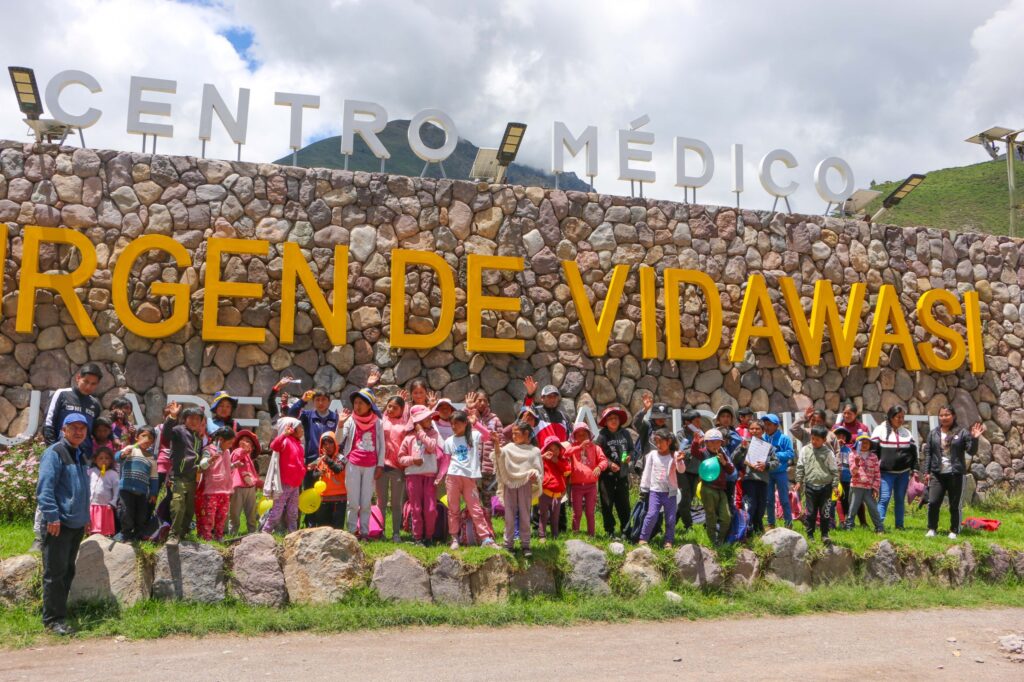
Jesus Dongo, founder of Vidawasi Peru; an oasis for children and their families in the Valley of the Incas
When Jesus Dongo was 36 years old, he thought he had it all: successful law practice, father, husband and budding real estate entrepreneur.
“I bought a plot of land in the Valley of the Incas in Peru and was going to build a luxury hotel,” said Dongo. “We were living as nominal Catholics and even went to mass on Sundays. But nothing more than that.”
Then Dongo and his 5-year old daughter Abigail were involved in a catastrophic accident with an all-terrain vehicle.
“My thorax collapsed. I was drowning in my own blood. All of my organs were severely damaged,” he said.
The doctors at the hospital where Dongo and his daughter were taken concluded that there was nothing that could be done to save him. A priest friend came to give him last rites with holy oil.
“During this agony, where I could not speak, I realized that I had finished my time on earth. I found myself before God, but my hands were empty,” he said.
Dongo realized that he had chased after the wrong things during his life and had not done God’s will for him. He remembers begging God for forgiveness and asking for one more opportunity for himself and his daughter. He promised God that he would save thousands of lives if given another chance.
The next memory he has is waking up the next morning, at 5am. Dongo woke up and felt a heat that covered him. It seemed to pass over every cell in his body.
“I opened my eyes, and I was well. A few minutes later, a nurse rushed in to tell me that my daughter had just woken up in her room. She was completely well,” he said.
After what could only be described as a miracle by the team of doctors at the hospital, Dongo and his daughter went home completely cured.
Except now, life would be very different.
Dongo went on to create a pediatric hospital on his property named Vidawasi, which in a combination of Spanish and Quechua means “House of Life”.
“In Peru, the best pediatric care was only in Lima before Vidawasi, but if you lived outside the capital, you were a statistic,” he said.
Today, Vidawasi is the best children’s hospital outside of Lima, treating thousands of children from remote areas of Peru who need specialized care, especially in the fight against pediatric cancer. Children and their families receive free, comprehensive pediatric care. The hospital is located within a micro-city where families in extreme poverty are provided housing and other social supports, while their child undergoes treatment.
The property did indeed become a luxury hotel, but for pediatric cancer patients and their parents.
Vidawasi has received 75,000 pediatric visits in the last four years. They see over 100 children every day.
Because of Vidawasi’s high level of care for children, they are now associated with St. Jude’s Children’s Research Hospital and Texas Children’s Hospital.
Vidawasi won the Campodonico Prize in 2022.