
March 12, 2026
When Harmica opened its doors in Zagreb in 2003, people were not sure what would happen.
After all, Croatians had endured 46 years of Communism (1945-1990), and four years of war against the Serb-controlled Yugoslav People’s Army (1991-1995). Opening a cultural center for girls and young women focused on faith, philosophy and virtue seemed unrealistic at best.
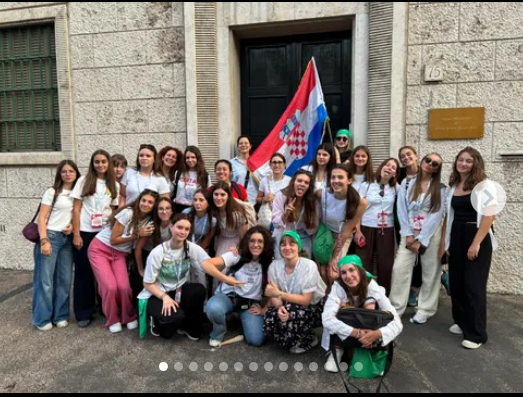
Yet 23 years later, Harmica is still going strong. Over 60 girls attend activities there weekly, ranging in ages from 12 and above.
Sometimes, crazy ideas are not so crazy after all.
Arriving in Croatia After Communism
Sofia Ana Blažević moved to Croatia in 2003 to finish her degree in molecular biology. Originally from a Croatian family living in Argentina, she moved back to the land of her grandparents at a time when many Croatians around the world were migrating back to their homeland.
She is now an associate professor of biology at the University of Zagreb. She is also the director of Harmica.
“In 1945, many of the most educated people in Croatia fled the country. But today, many people have migrated back. Still, because of Communism, a whole generation of educated people left the country – and this left a mark,” said Blažević.
When she arrived in 2003, there were not many shopping centers nor private companies in Croatia.
“Everything had to be made from scratch. You can see the evidence of Communism. Even young people, when you speak to them, they don’t have clear thoughts about it,” said Blažević.
During Communism, people received salaries for their work – whether they actually worked or not.
“Because of this, I sometimes notice a culture of not appreciating hard work,” she said. “There can be a lack of honesty about work. Sometimes a lack of fairness.”
Nurturing the Heart, Mind and Soul
Harmica’s activities are geared towards girls in middle school and high school and university-aged women.
“During the week, we have groups that meet for middle school girls and high school girls,” said Blažević. “The 15 middle school girls who come to Harmica meet three times per month. For them, we have classes in cooking, cultural visits to museums, watching movies, and volunteer work. We hope to stimulate friendships among the girls. And in fact, there are many girls – who years later – are still very good friends. It is very beautiful.”
At the high school level, 30 girls meet on Saturdays for a workshop on Sean Covey’s book entitled The Six Most Important Decisions You Will Ever Make: A Guide for Teens.
“This workshop focuses on the topics of school, friendships, parents, love and relationships, drug abuse, and self-esteem,” said Blažević.
Covey’s book was published in 2005 and was soon translated into Croatian.
For Kira Dorotić, a 17-year-old girl who dreams of becoming a fighter pilot, this workshop has been eye-opening.
“We have covered four of the decisions so far. They bring in a different person every time to present the chapter. When we began, I did not know what to expect. I thought: I have heard all of this stuff a million times. But I have been really surprised,” said Dorotić.
The book discusses the different ways that people give and receive love.
“We learned about how important it is to know yourself and understand your own love language – such as words of affirmation or physical touch,” she said.
Before taking the workshop, Dorotić didn’t think she needed it.
“But it has really opened my eyes to everyone in my life. I realized that I need to know myself and that this can really help me in my relationships with my parents and friends. It really taught me something new,” said Dorotić.
Another topic that the Covey book covered was chastity.
“The presenter spoke about relationships and how she met her husband, which was really helpful. She showed that it is possible to be chaste before marriage. This really helped me and showed me that it isn’t impossible to accomplish,” she said.
During the workshop, all questions are allowed, and the high school girls can talk about anything.
“There is no shame or judgement. They understand you. I knew some of the girls from before. But others are new. We have had great conversations,” said Dorotić.
Community Service
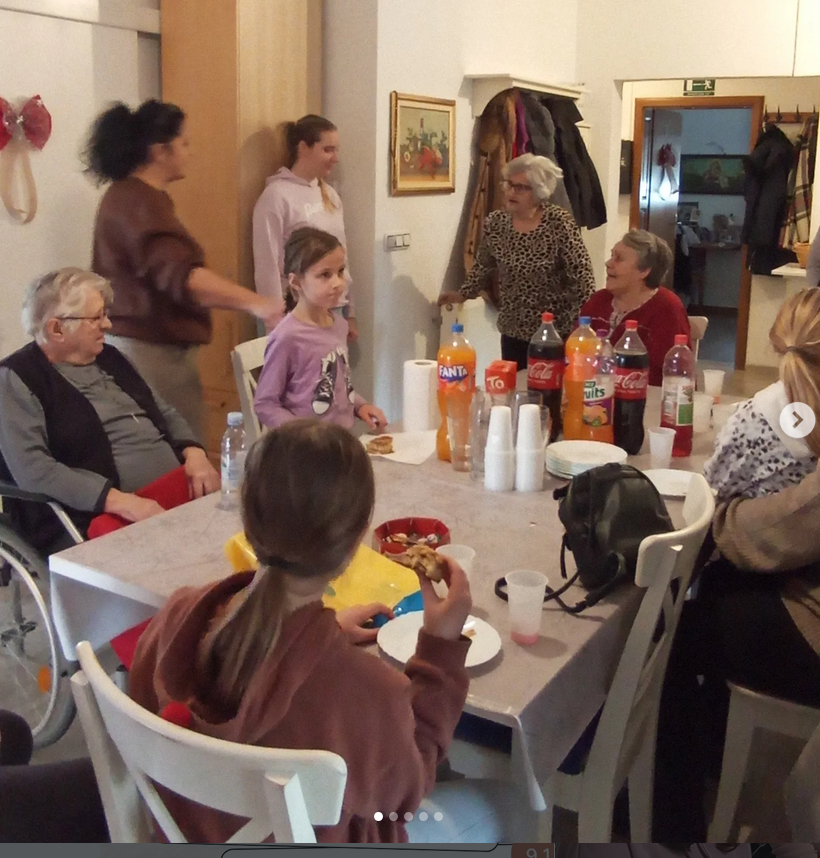
Besides the Book Club, Harmica also organizes community service activities. The high school girls prepare food for the homeless and distribute the food through a Catholic church center. University students visit the elderly or sick people. During Christmas, there is a campaign to bring gift boxes to the children of poor families.
University Residence – A Second Home for Students
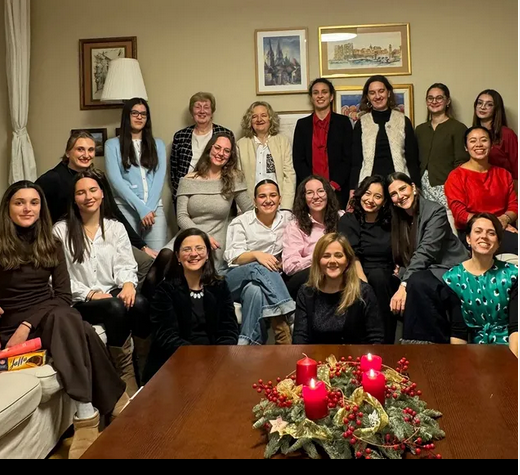
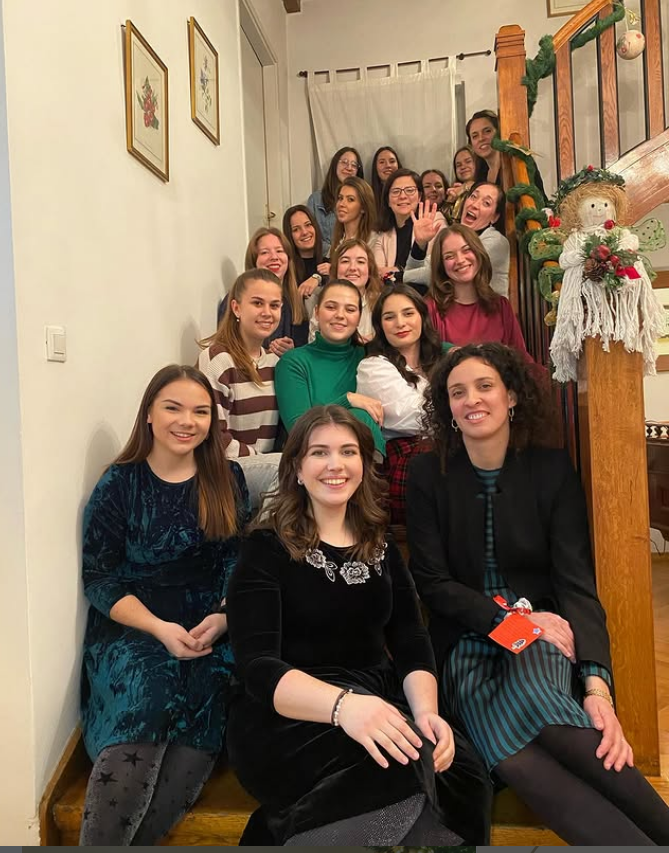
There are 19 women who live in Harmica. Of these, 11 are university students ages 19 to 22. They are in their first three years of university. For these residents, Harmica offers several classes on culture and religion.
The religion classes are open to anyone, though they are not mandatory.
“We have a student who is an atheist who lives here. She’s amazing. She comes to all the religion classes and likes to debate. Because of her, it sharpens all our arguments,” said Blažević.
The only mandatory classes are those on culture.
“We bring in guests who speak on a wide variety of topics that have to do with careers. These are not necessarily faith-driven,” said Blažević.
Some of the classes have to do with professional careers, methods of study, bioethics, anthropology and philosophy. There are also seminars on work and family life.
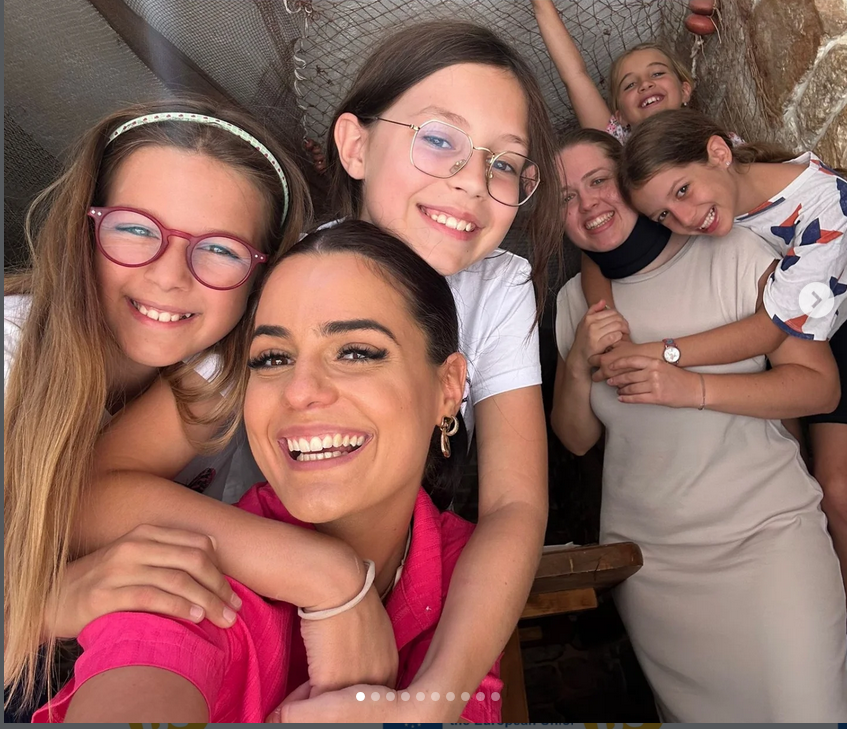
In terms of social events, Harmica organizes excursions to see musuems and musical concerts in Zagreb.
The Beauty of Friendship
One of the main benefits of Harmica are the friendships that emerge from the activities.
“I have one friend for ten years,” said Dorotić. “We have been coming to Harmica all this time. In the beginning, we hated each other. But we learned how to be honest with each other and now we are the best of friends.”
Discussions on the spiritual life have nurtured the girls, as well as their friendships.
“Harmica brings us closer to God and faith. The world tries to distance you, but Harmica brings us closer through talks, and priests and mentors,” said Dorotić.
The Gift of Mentorship
When Ana Aračić, a second-year sociology student, began her university studies, she knew that she didn’t just want to grow intellectually. She also wanted to grow spiritually.
“I knew that this was a period that I had to take advantage of because I had complete freedom to progress, but on that path of freedom it is easy to get lost if we don’t have the right people around us. I found exactly those right people in Harmica,” said Aračić, who has been living at Harmica for two years.
One of the concrete ways that Harmica helped her was through mentoring. It was especially helpful for Aračić as she learned how to live well with others.
“I don’t know how familiar you are with the situation of student dormitories in Zagreb, but I always tell my friends from Harmica that we live in a hotel, but that we shouldn’t behave like we are in one. Even though I come from a large family, Harmica taught me how to function in a large community,” said Aračić.
Through her mentor, she learned that sometimes when you live in community, “You have to silence your desires because everything is a matter of compromise and good communication.”
When it came to her academic life, Aračić feels greatly supported.
“In Harmica, I get full support for my academic development. I am a person who dreams of big things, but I always lack that little bit of courage to make a crucial move,” she said. “But you know what? When I see my mentors who have come from the other side of the world to serve God and others, I really feel inspired.”
For the young women residing in Harmica, they see their center as a launch pad to their own dreams, supported by the wisdom of faith.
“In Harmica, you hear so many life stories,” said Aračić, “and when you tell your own, the only thing you feel is love.”