

The Democratic Republic of the Congo (DRC) features in many tragic news stories: 7.4 million internally displaced people, continued fighting across multiple fronts, 25.5 million people suffering from food insecurity.
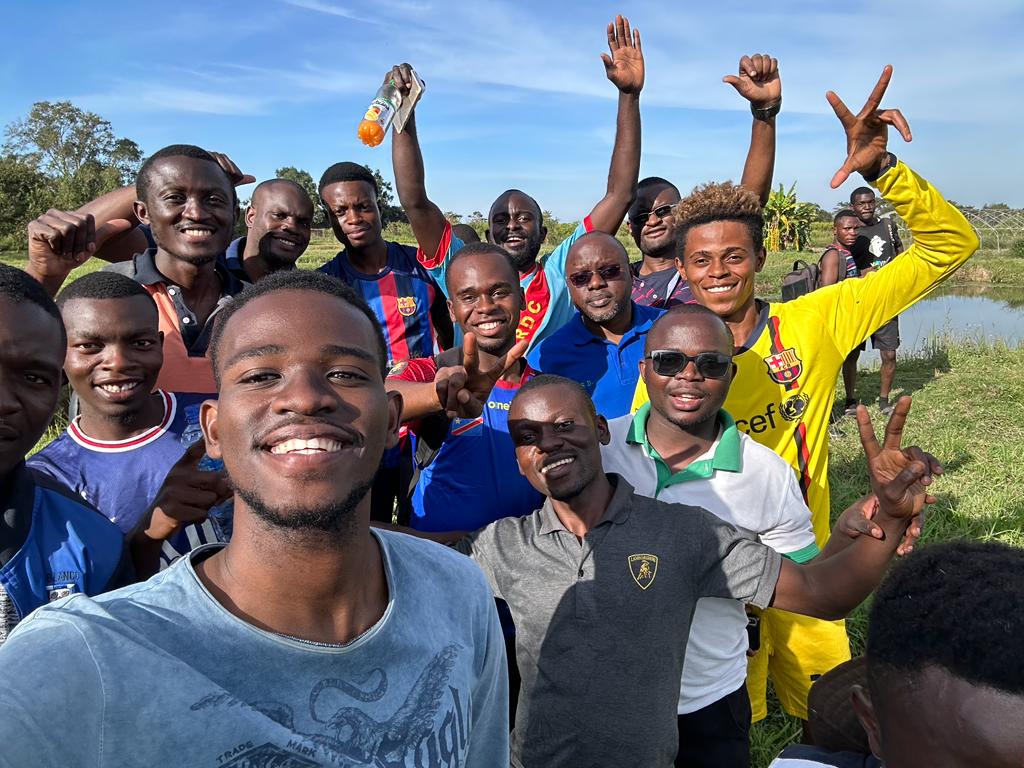
One bright light that shines in the country is the Tabora University Cultural Center in Lubumbashi, the second largest city in DRC. This city is located within a peaceful mining region about 597 miles away from the conflict zone. Tabora is a training center for university students to help them grow in professional skills as well as spiritual and moral values. Its goal is to foster a new generation capable of turning the country around.
One student at a time.
A Nation in Distress
DRC is the second largest country in Africa, with a population of 112 million. It is the largest Francophone country in the world. 50% of the population is Catholic, 20% Protestant and 10% Muslim. 75% of the population is under the age of 30.
One of the great ironies of the DRC is that it is exceptionally rich in natural resources. It has vast deposits of diamonds, gold, cobalt, copper and coltan; an essential mineral used in smartphones. It also has the world’s second largest rain forest. Despite this, DRC regularly ranks among the bottom 10 poorest countries according to reports from several international organizations.
“It’s the contrast that we live in: having an immensely rich country, something we call a ‘geological scandal’, but at the same time having a poor population,” said Charly Nshokano, secretary general of the non-profit Association pour la Promotion Sociale de la Culture (APSC), which runs the Tabora University Cultural Center.
From 1998 to 2003, the DRC experienced the second Congo Civil War, which left an estimated 5.4 million people dead. It was the bloodiest war in the world since WWII, though few people even know about it. The reason for the fighting has to do with tension among ethnic groups and armed militias fighting over natural resources.
The Eastern part of the DRC, near Rwanda, is the area where most of the fighting occurs. This area has seen the most hunger, violence and displacement.
“Being originally from South Kivu, near Rwanda, I regularly receive news about the hardships our brothers and sisters are experiencing in eastern Congo,” said Nshokano. “The situation in our country is very worrying. We have been at war for 30 years with Rwanda and Uganda.”
Helping Generation Z
Because of the terrible situation within the DRC, many are worried about the next generation. Tabora was created to address the need to train young men in professional skills, as well as the moral values needed to move the country forward.
“We need to form people to work to develop the country. There are few people prepared professionally,” said Nshokano. “The quality of education and training has declined significantly in the country.”
Tabora opened in 2008 and was named after a famous battle in Tanzania between Germans and armed forces of Congolese and Belgians in WWI.
“We decided on this name, not because of the fight against the Germans, but because we are in a fight against ignorance, and ‘anti-values’ that lies in wait against young Congolese and stops them from developing.” said Nshokano.
A Wide Array of Classes
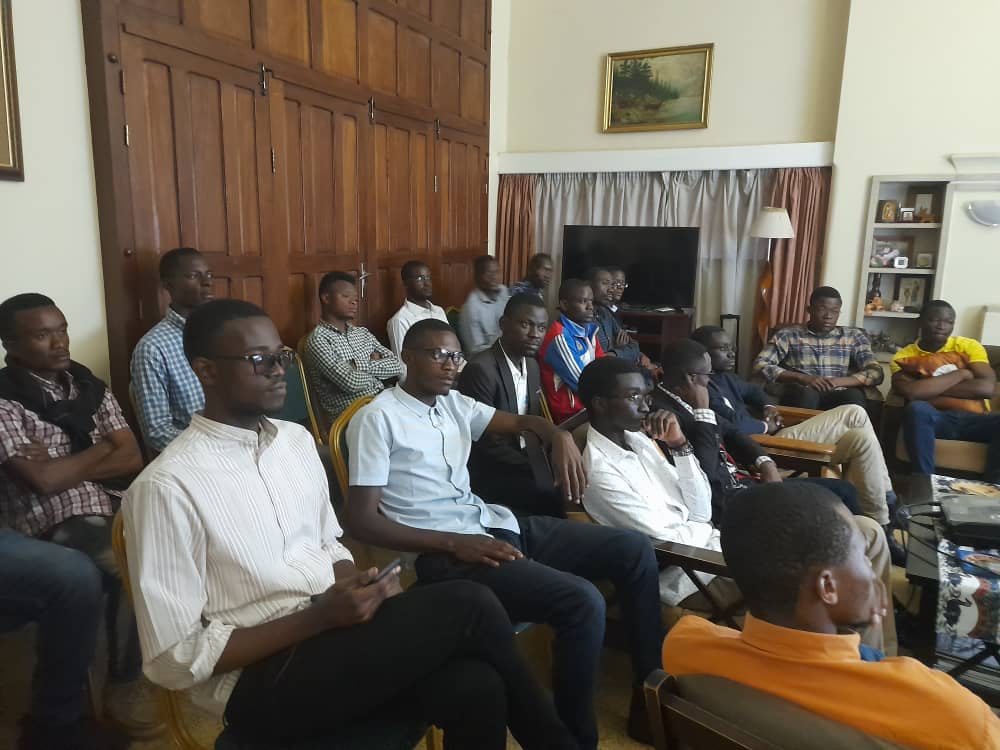
Tabora is focused on university students. In an average year, they see 1,500 students. Classes are offered on most Saturdays of the year on a wide variety of subjects: literature, computer science, engineering, law, medicine, fine arts and leadership. Activities and access to study rooms and the library are free.
“However, we ask students to make a voluntary contribution for the maintenance of the center,” said Nshokano.
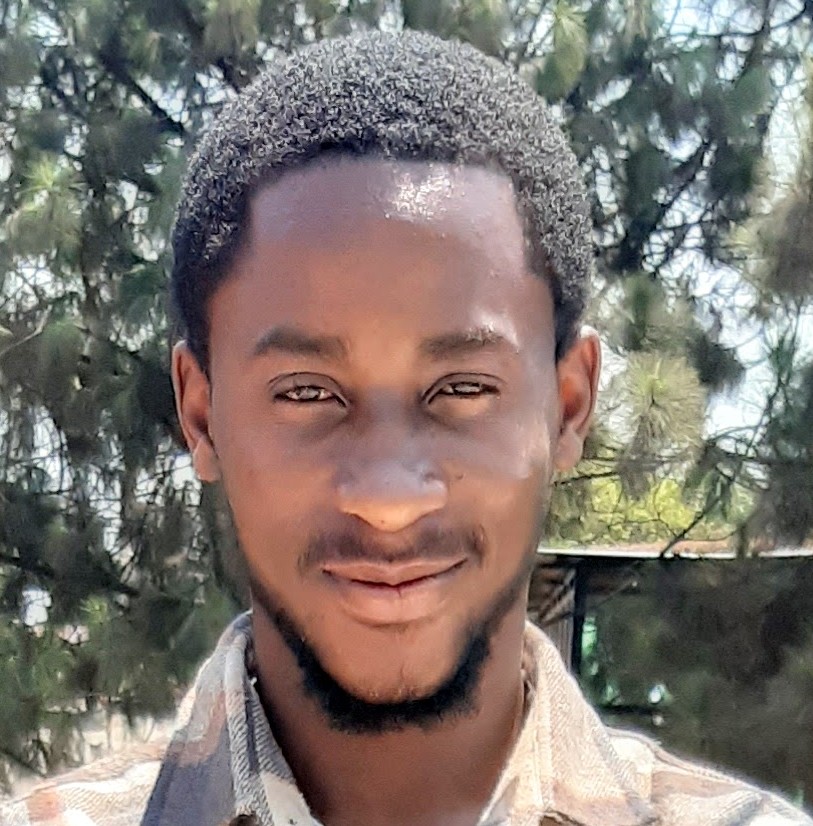
Guy Arthur Wanzire, a 21-year-old computer science student, appreciates both the professional and spiritual aspect of Tabora. He studies at Don Bosco University in Lubumbashi.
“What I experienced in Tabora was a place for personal and group formation. It has been a place where I have felt understood and motivated to work,” said Wanzire.
He takes part in a class that meets to discuss topics in computer programming.
“We do classes on computer languages, like Python and C++. Sometimes, my classes at the university are not very complete. My projects at Tabora actually help me anticipate some of the computer classes,” he said.
The classes offered at Tabora are meant to complement what the students are already studying at their universities. Tabora also offers classes in public speaking.
“Some of our students have even won oratory competitions,” said Nshokano.
Tabora offers literature classes where, every year, students meet to read and discuss several books.
“We read Crime and Punishment and White Nights by Dostoevsky, the Little Prince by Saint-Exupéry, Pensées by Blaise Pascal, and Congo: The Epic History of a People by David Van Reybrouck. We meet and share our ideas about the books,” said Emmanuel Kihasula, a 21-year-old medical student at the University of Lubumbashi.
Tabora also brings in local professionals and professors to speak to young men about their careers and field.
Within the field of business, Tabora offers classes in accounting, psychology and entrepreneurship.
“When the students finish, they can launch themselves and build a business,” said Nshokano.
In order the help the students keep physically and mentally fit, Tabora also offers sports and cultural activities through field trips, soccer tournaments and local sightseeing.
Spiritual Accompaniment
The leadership of Tabora is inspired by Christian values of service, loyalty and justice. Every month, they host a two-hour spiritual retreat that focuses on a different virtue.
Kihasula is deeply grateful for this aspect of Tabora.
“This center has permitted me to grow up, not just in the area of my studies, but also on the human and spiritual plane of my life. I have learned how to have a deeper relationship with others. It has allowed me to discover my mission, and strengthened my will to serve others,” said Kihasula.
Wanzire believes that Tabora has helped him develop an ethic of life.
“In computer science, we study cybersecurity. But people need to know why we need this. You need to have a morality in this field. Tabora has helped to orient me,” he said.
“Today, a virtuous person is very important, especially with the onset of artificial intelligence. Professional formation is not enough,” said Toussaint Ramazani, director of Tabora. “We are interested in helping students learn about the virtues. We are not only teaching them about professions, but also how to be good people.”
In addition to these activities, Tabora helps young people develop their civic commitment.
“We organize social and volunteer activities, such as visiting the poor and sick,” said Nshokano.
These efforts have made a profound impact on the young men who attend the center.
“Tabora has changed me,” said Kihasula. “I have learned a profound sense of love: love for people and loving the world passionately. In every retreat, we speak about a different virtue. I have learned the virtue of magnanimity and service to others.”
What the Future Holds
Tabora is now expanding its building with a grant from the Clover Foundation so that they can train even more students in the future.
“Our goal is to offer young people a comprehensive education that encompasses all aspects of their personalities. Through Tabora, they can acquire theoretical and practical professional skills and, at the same time, moral virtues that will transform them not only into technically competent leaders but also into honest, integrated citizens dedicated to the cause of others,” said Nshokano.
When the news is dark in the DRC, the leaders of Tabora try to keep their focus on building up the next generation.
“We must not sit idly by. In our case, we are committed to the training and guidance of young people, convinced that it is the young people of today who will build and uphold this country. They need to be prepared to take on the great task of the political, economic, social, and cultural recovery of our country,’ said Nshokano.
The greatest accomplishment of Tabora is that is allows young men to dream big in a country where so many dreams are shattered.
“My dream is to serve my country. First, I want to finish my studies and become a doctor. Then I want to serve my country in the best way possible. I want to take part in humanitarian projects,” said Kihasula.
“I want to contribute to the technological evolution of my country and make a positive impact not only for my country, but also the world,” said Wanzire. “But also, I want to help abandoned children have a better life, like what I have seen at Tabora.”
For Ramazani, the operation of Tabora is already bearing much needed fruit.
“The formation we give here at Tabora can change things. It is the only way to change the situation in Congo. It has to happen within people,” he said. “This is why we need to keep growing.”